Search for:

applied math pdf

Popular Applied Mathematics PDF Titles

Applied Mathematics I by Begashaw
Academic Course Resources

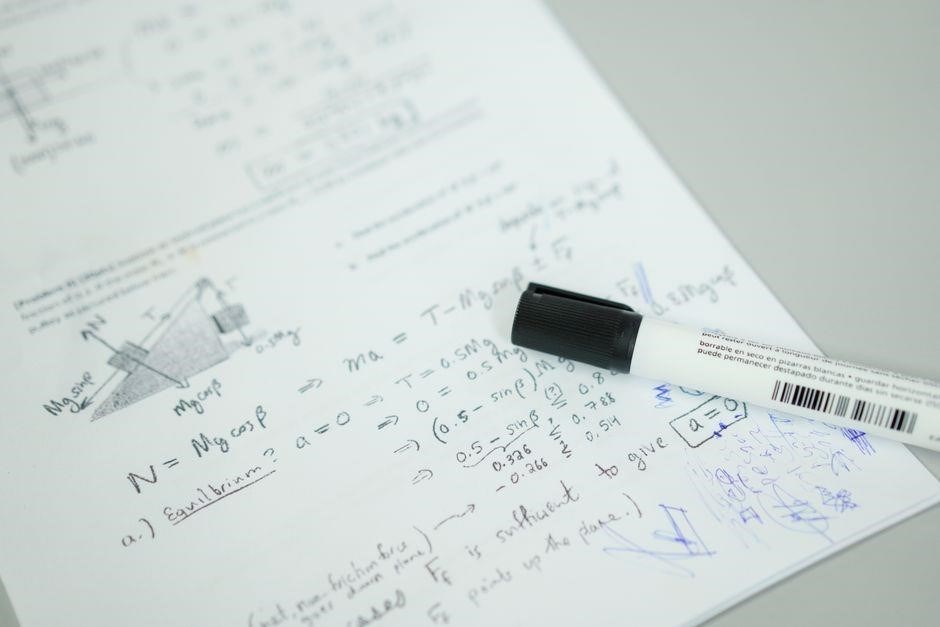
Explore freefully PDFs of core applied‑math texts,lecture slides,and problem sets.Resources include calculus, differential equations, and linear algebra materials, downloadable and annotated for student use. These PDFs support interactive learning and exam prep.

Applied Calculus Course Materials

Students can download free, PDF‑based lecture notes, problem sets, and solutions for applied calculus from open‑access repositories. The core materials cover limits, continuity, differentiation, integration, series, and multivariable extensions, with each chapter beginning with concise summaries, key theorems, and practice problems. Annotated PDFs include instructor‑style marginalia, example solutions, and suggested reading lists. High‑resolution formats allow precise annotation with tools such as Adobe Acrobat or PDF‑XChange. Interactive worksheets embedded as PDF forms let students submit solutions electronically. A companion workbook integrates real‑world applications—population growth, heat transfer, and economic optimization—into the calculus framework. The open‑access nature enables instructors to adapt PDFs to their teaching style, adding custom annotations or supplementary slides. Overall, this collection supports self‑study and classroom instruction, offering a flexible foundation for diverse learning styles.

  • Comprehensive lecture notes covering foundational calculus concepts.
  • Problem sets with step‑by‑step solutions for self‑practice.
  • Annotated PDFs for enhanced understanding.

These PDFs are downloadable and can be incorporated into a management system, ensuring that both instructors and students have access high‑quality materials.!!

Core Applied Mathematics Course Topics

Core applied mathematics courses blend theory with real‑world modeling, offering students a toolkit for quantitative analysis across science, engineering, and economics. Typical curricula begin with differential equations—first‑order linear, separable, and Bernoulli forms—then advance to systems of equations and Laplace transforms for transient analysis. Students learn numerical methods—Euler, Runge–Kutta, and finite difference schemes—supported by downloadable PDF worksheets that illustrate step‑by‑step implementations. Vector calculus modules introduce gradient, divergence, and curl, with applications to fluid dynamics and electromagnetism; accompanying PDFs include annotated vector field diagrams and integral theorems. Fourier analysis and Laplace transforms are explored through spectral decomposition of signals, with PDF tutorials offering visual plots and convergence criteria. Probability theory and statistics are integrated, presenting probability distributions, expectation, variance, and hypothesis testing; PDF handouts feature worked examples and simulation scripts. Optimization techniques, both linear programming and nonlinear methods, are taught using simplex algorithms and gradient descent, with PDF case studies on resource allocation and machine learning loss functions. Partial differential equations—heat, wave, and Laplace equations—are solved via separation of variables and Green’s functions, with PDF solutions that include symbolic derivations and graphical interpretations. All materials are freely available as PDFs, enabling instructors to adapt content and students to annotate directly, fostering an interactive learning environment that bridges abstract theory and practical application.

Linear algebra foundations cover vector spaces, bases, and matrix operations, with PDFs detailing eigenvalue computation, diagonalization, and Jordan canonical forms. Students explore matrix exponentials for solving linear ODE systems, supported by illustrative PDFs showing time‑evolution plots. Stability analysis of dynamic systems is introduced via Lyapunov functions and Routh–Hurwitz criteria, supported by PDF worksheets that guide students through stability proofs. Control theory concepts, including state‑space representation and feedback design, are presented with PDF case studies on PID controllers and observer design. Differential geometry basics introduce manifolds, tangent spaces, and differential forms, with PDFs offering visualizations of curves and surfaces in three dimensions. Supplementary code available!

Open Access Repositories

Open access repositories host applied math PDFs. University libraries digitize collections, while arXiv offers preprints on PDEs, optimization, and stochastic processes. Free, searchable PDFs let students and researchers worldwide access cutting‑edge material!!!!

University Library Digital Collections

arXiv Preprint PDFs in Applied Math

ArXiv hosts a vast repository of preprint PDFs that are indispensable for applied mathematics scholars. Researchers can submit manuscripts in categories such as “math.AP” (Applied Mathematics) and “math.NA” (Numerical Analysis) before peer review, enabling rapid dissemination of new theories, algorithms, and computational results. The platform’s search interface allows filtering by author, institution, or keyword, and many papers include supplementary code or data sets linked via GitHub or Zenodo. Because arXiv PDFs are freely accessible, educators can incorporate cutting‑edge research directly into curricula, and students can practice reading contemporary research papers without paywalls. The preprint format also encourages community feedback; authors often revise their manuscripts based on comments received in the comments section. Moreover, arXiv’s versioning system preserves the publication history, so readers can track changes from the initial draft to the final published version. For applied mathematics, this means early access to novel PDE solvers, stochastic modeling techniques, and machine‑learning‑based numerical methods. The open‑access nature of arXiv aligns with the broader movement toward reproducible research, as many preprints provide LaTeX source files and executable notebooks. Finally, arXiv’s integration with reference managers (e.g., Zotero, Mendeley) streamlines citation management, making it easier for scholars to keep up with the latest developments in applied mathematics. ArXiv’s policy encourages authors to share their LaTeX source, ensuring that readers can compile the document themselves, which promotes transparency and reproducibility in applied mathematics research, and this open‑source approach has been adopted by many leading journals and conferences worldwide, fostering collaboration across disciplines and growth.!!

Students and teachers use PDF textbooks for interactive learning. Annotation tools let learners highlight equations, add notes, and share insights. Many platforms support cloud sync, enabling collaborative problem‑solving across campuses. This enhances engagement and retention. Annotate on the go!!

PDF Annotation Tools for Students

Students tackling applied‑math PDFs benefit from robust annotation tools that let them mark equations, add comments, and collaborate in real time. Popular free options include Adobe Acrobat Reader DC, which offers sticky‑note, highlight, and shape tools, and Foxit Reader, known for lightweight performance and a built‑in PDF editor. Cloud‑based platforms such as Kami and Notability allow students to upload a PDF,annotate with pens,underline key formulas, and export the annotated file back to the course LMS. For those who prefer open‑source solutions, PDF-XChange Editor provides a rich set of markup features, including callouts, text boxes, and a mathematics toolbar that supports LaTeX‑style input for precise notation. Mobile‑friendly apps like GoodNotes and Microsoft OneNote support stylus input, enabling handwritten derivations to be captured directly on the screen. Integration with Google Drive or Dropbox ensures that annotated PDFs stay synchronized across devices, while version control features in tools like Mendeley help track changes over time. By leveraging these tools, students can actively engage with complex material, clarify doubts through inline comments, and share insights with peers, thereby enhancing collaborative learning and deepening conceptual understanding of applied‑mathematics topics. Students often share annotated PDFs with classmates enabling peer review and problem solving, which reinforces learning and fosters a community of inquiry.

Legal Considerations for PDF Distribution

Distributing applied‑math PDFs requires respecting copyright law. Use only materials under Creative Commons or public domain, or obtain explicit permission. Short excerpts for teaching, but full copies usually need licensing. Always cite sources.!!!

Copyright and Fair Use in Academic PDFs

In the U.S., the Copyright Act permits “fair use” for limited, non‑commercial academic purposes. Courts assess four factors: 1) purpose and character (educational, transformative); 2) nature of the work (non‑fiction, factual works are favored); 3) amount and substantiality (generally <10 % of the whole or a few pages); 4) effect on the market (no significant impact on sales). When a professor shares a short excerpt to illustrate a concept, the use is usually deemed fair. However, the amount factor is strict; large passages or entire chapters typically require permission or a license. If a PDF is not in the public domain, the author or publisher may grant a license for academic use; this is often documented in the PDF metadata or a separate license file. When in doubt, consult the university’s legal office or publisher’s policy to confirm compliance.

Additionally, the “transformative” use defense strengthens a fair‑use claim when the PDF is repurposed to create new content, such as lecture slides or annotated notes that add commentary, analysis, or synthesis. Proper attribution and limiting the excerpt to the minimum needed for the educational purpose further mitigate risk. Some publishers offer “educational use” licenses that allow the entire text to be shared within a course, provided it is not sold or used commercially. When distributing PDFs via learning management systems, ensure the platform’s terms of service do not conflict with the license. Keep a record of source, excerpt length, and purpose to support compliance. Check publisher policy for licensing. and!??

Creative Commons Licenses for Textbooks

Creative Commons (CC) licenses provide a flexible framework for authors to share their work while retaining certain rights. For applied mathematics textbooks, the most common CC options are CC BY, CC BY-SA, and CC BY-NC. CC BY allows anyone to copy, distribute, and adapt the text, provided the original author is credited. CC BY-SA adds a share‑alike clause, requiring derivative works to carry the same license, which encourages a growing, openly‑shared knowledge base. CC BY-NC restricts use to non‑commercial purposes, which is often suitable for academic settings but may limit broader dissemination. When a textbook is released under a CC license, the publisher typically includes a license statement in the PDF metadata and a visible badge on the cover page. Authors must also ensure that all embedded content—figures, tables, and code snippets—are either original or themselves licensed under compatible terms. Some CC licenses, such as CC BY-NC-ND, prohibit any modification, which can be restrictive for educators wishing to annotate or translate the material. In contrast, CC BY-NC-SA allows educators to adapt the text for classroom use, provided the adapted version remains non‑commercial and shares the same license. The choice of license can influence how the textbook is incorporated into open‑education platforms, such as OER repositories or university libraries, and can affect the ability to convert PDFs into interactive formats like Jupyter notebooks or e‑books. …

Future Trends in Applied Math PDF Resources

Emerging developments in applied‑math PDF distribution are reshaping how scholars access, annotate, and disseminate technical material; First, machine‑learning–driven summarization tools can auto‑extract key equations, proofs, and data tables, enabling researchers to skim large volumes quickly. Second, dynamic PDFs embed executable code cells that launch Jupyter kernels directly from the document, allowing readers to test hypotheses in real time without leaving the PDF viewer. Third, blockchain‑based provenance records are being added to PDF metadata, guaranteeing immutable authorship and version history for open‑source textbooks. Fourth, micro‑licensing schemes let authors sell individual chapters or modules under flexible terms, encouraging modular learning paths. Fifth, accessibility standards are expanding to include audio‑described PDFs and high‑contrast rendering, making advanced mathematics more inclusive. Finally, cross‑platform collaboration platforms are integrating PDF annotation with version control, so that peer review and curriculum updates can occur in a single, traceable workflow. These innovations promise to make applied‑math PDFs more interactive, trustworthy, and adaptable to the evolving needs of educators and researchers worldwide. Additionally, the use of AI‑driven natural language processing is enabling the automatic extraction of key concepts from PDFs, which can be instantly linked to interactive simulations ynamic mod.


dodge ram 2500 wiring schematics pdf

Overview

Detailed 2015‑2020 Dodge Ram 2500 wiring schematics PDFs compile power, lighting, audio, and accessory circuits. They list pinouts, fuse locations, and connector diagrams, enabling technicians to troubleshoot or modify the truck’s electrical system efficiently. These PDFs include pinouts and fuse diagrams.

Definition of Dodge Ram 2500 Wiring Schematics PDF

A Dodge Ram 2500 wiring schematics PDF is a comprehensive electronic document that maps every electrical connection within the vehicle’s chassis. It typically includes a full set of circuit diagrams, pin‑out tables, fuse and relay locations, and connector block layouts. The PDF format allows for high‑resolution, zoomable images that preserve the clarity of complex wiring diagrams, making it easier for technicians to identify faulty circuits, replace components, or integrate aftermarket accessories. The schematics will reflect updates in the 4‑door and 6‑door configurations, changes in the 6.7‑liter Power Stroke diesel engine wiring, and the integration of the latest infotainment systems. Users can annotate the PDF with notes, mark up sections for future reference, and export specific pages for sharing with colleagues. Because the PDF is a non‑editable format, it preserves the integrity of the original diagrams, preventing accidental alterations that could compromise safety or functionality. Access to these documents is often restricted to authorized dealers or technicians, but many aftermarket suppliers offer downloadable copies for hobbyists and repair shops!!! When working with a Dodge Ram 2500 wiring schematics PDF, it is essential to cross‑reference the diagram with the vehicle’s VIN and service bulletins to ensure that the correct version is being used. and ensure compatibility with all modules. This guarantees that the wiring references match the specific trim level, engine

Sources

Official Dodge Service Manuals provide the most accurate wiring schematics, while community‑generated PDFs offer quick access for DIY repairs. Both types include pin‑out tables, fuse locations, and connector block diagrams, ensuring technicians can reference the correct version for each trim and engine variant. All diagramsare OEM‑approved.

Official Dodge Service Manuals

For precise diagnostics and repair, the primary reference is the OEM Dodge Service Manual, which contains exhaustive wiring schematics for every 2015‑2024 Ram 2500 variant. These PDFs are released annually by Mopar and include detailed pin‑out tables, fuse block diagrams, and connector block layouts for power distribution, lighting, audio, and accessory circuits. The manuals also provide troubleshooting flowcharts that map fault codes to specific wire paths, making it easier for technicians to isolate issues such as shorted grounds or miswired sensors. In addition, the service manuals contain revision notes that highlight any changes made to the electrical architecture between model years, ensuring that a technician working on a 2019 model does not inadvertently use a 2015 diagram. Access to the full PDF is typically granted through a subscription to the Dodge Dealer Portal or via authorized third‑party distributors, and the files are available in high‑resolution PDF format for printing or on‑screen review. The diagrams are annotated with part numbers and OEM part codes, allowing for quick ordering of replacement components. For example, the 2017 Ram 2500 Powertrain Wiring Diagram shows the exact routing of the 12‑V battery to the alternator, starter, and ECU, while the 2020 model update includes a new 48‑V high‑voltage battery system for the e‑Ram variant. These official documents are considered the gold standard for any repair shop or enthusiast seeking to maintain electrical integrity and compliance with safety regulations. Moreover, the manuals provide a comprehensive list of wire colors and corresponding functions, which is invaluable when performing custom installations such as aftermarket infotainment systems or remote start kits. The inclusion of schematic overlays for the front and rear fender wiring harnesses allows technicians to trace signal paths from the driver’s seat to the rear passenger compartment, ensuring that seat‑sensing modules and airbags remain functional after modifications. Finally, the service manuals include safety cautions and recommended torque specifications for all electrical connectors, helping technicians avoid damage to sensitive components during routine maintenance. These resources are updated annually to reflect changes in emission controls and infotainment technology.

Community‑Generated PDFs

Community‑generated wiring PDFs for the Dodge Ram 2500 are shared by enthusiasts on forums, swap meets, and automotive sites. These documents are compiled from OEM manuals, aftermarket harnesses, and reverse‑engineering efforts. They provide pin‑out charts, fuse block diagrams, and connector layouts for models from 2010 to 2022, and are useful when OEM PDFs are unavailable or expensive. Many PDFs are hosted on platforms such as 4RVs, DodgeForums, and R&R. Users can download them for free after creating an account. The community often updates files to reflect changes in the 48‑V high‑voltage architecture introduced in the 2020 e‑Ram, ensuring accurate wiring diagrams for gasoline and diesel variants. While community PDFs can be detailed, they may lack the rigorous quality control of official manuals. It is advisable to cross‑reference critical sections with an OEM source or a reputable service manual to avoid misinterpretation of wire functions or connector pinouts. The legality of downloading or sharing these PDFs varies by jurisdiction; many users rely on the “fair use” doctrine for repair purposes, but it is essential to respect copyright restrictions and use the documents solely for personal, non‑commercial repair work. Overall, community‑generated PDFs serve as a valuable supplement for technicians and DIYers, offering a cost‑effective alternative to official documentation. xxxxxxxxxxxxxxxxxxxxx

Wiring Sections

Power Distribution, Lighting & Accessories, Audio & Entertainment sections detail fuse locations, voltage rails, connector pinouts, and signal paths. Each diagram maps wire colors to functions, aiding diagnostics and aftermarket installs. All diagrams are color‑coded for quick reference.!!!

Power Distribution

In the 2015‑2024 Dodge Ram 2500, the power distribution diagram is the backbone of all electrical troubleshooting. The schematic shows a 12‑volt system fed from the battery through a master switch, then split into high‑current and low‑current buses. The high‑current bus powers the engine control module, alternator, starter, and heavy‑duty accessories such as winches and air‑conditioning compressors. The low‑current bus supplies the body‑control module, infotainment, lighting, and safety electronics. Each fuse block is labeled with a unique identifier, amperage rating, and a color‑coded wire gauge. The diagram also lists the exact pin numbers for each connector, including the 10‑pin power connector on the front of the engine bay, the 12‑pin connector on the rear firewall, and the 8‑pin connector for the auxiliary battery. The schematic indicates the routing of the main ground strap, which runs along the chassis and connects to the engine block, transmission, and frame. Ground paths are highlighted in green to distinguish them from power lines. The diagram shows the location of the main fuse box under the driver’s seat, the secondary fuse box in the rear cargo area, and the auxiliary fuse box in the engine compartment. It also details the wiring for the high‑voltage 48‑V hybrid system found in the 2024 model, showing the battery pack, DC‑DC converter, and inverter connections. The power distribution section includes a table that cross‑references each fuse with its function, such as “Fuel Pump”, “Ignition Coil”, “Headlights”, “Power Steering”, and “Rear‑view Camera”. The table also lists the recommended replacement part numbers for each fuse and connector. Finally, the schematic provides a troubleshooting flowchart that guides technicians through common issues such as a dead battery, blown fuse, or intermittent power loss, by checking the continuity of the main power rails, verifying the integrity of the ground strap, and inspecting the fuse status. This comprehensive view enables rapid diagnosis and repair of electrical faults in the Dodge Ram 2500. The schematic also illustrates the use of a dedicated 30‑amp fuse for the electric power steering system, ensuring that the steering motor receives a stable voltage supply. Additionally, a 15‑amp fuse protects the rear‑view camera and parking sensors, while a 20‑amp fuse safeguards the infotainment system. The diagram shows that all power cables are routed through the firewall using shielded conduits to minimize electromagnetic interference. The use of a common ground point at the engine block reduces voltage drop across long runs, improving reliability. The power distribution section also highlights the optional aftermarket power modules, such as a 12‑V DC‑DC converter for auxiliary batteries, and a 48‑V DC‑DC converter for high‑power accessories. These modules are shown with their input and output terminals, and the schematic indicates the recommended fuse ratings for each module. By following the layout, technicians can quickly identify the source of a fault and replace the correct component without unnecessary disassembly.

Lighting & Accessories

The 2015‑2024 Dodge Ram 2500 lighting schematic details every illumination circuit. The front diagram shows LED headlamps, daytime running lights, and fog‑light modules, each fed from a 12‑V rail with a 20‑amp fuse. The schematic labels the 6‑pin firewall connector: pin 1 left headlamp, pin 2 right headlamp, pin 3 left fog, pin 4 right fog, pin 5 daytime running, pin 6 auxiliary LED strip. The rear diagram lists tail‑light, brake‑light, reverse‑light, and turn‑signal modules, all sharing a 12‑V bus with a 15‑amp fuse. It includes the 8‑pin rear connector: pins 1‑2 left tail, 3‑4 right tail, 5‑6 left brake, 7‑8 right brake. Interior lighting shows dome lights, reading lights, and footwell LEDs, each controlled by a 12‑V relay with a 10‑amp fuse. The schematic also maps wiring for power‑window switches, power‑seat modules, and the auxiliary battery charger, all routed through the 12‑V bus and protected by 20‑amp fuses. The accessory diagram lists the infotainment system, rear‑view camera, and navigation unit, each with a 12‑V supply and a 15‑amp fuse. The diagram includes the 10‑pin connector for the rear‑view camera: pins 1‑2 power, 3‑4 ground, 5‑6 video input, 7‑8 video output, 9‑10 signal. The schematic shows wiring for the power‑steering motor, which uses a 48‑V rail with a 30‑amp fuse, and the electric‑steering control module. The diagram also highlights the optional aftermarket LED upgrade kit, with a 12‑V DC‑DC converter and a 20‑amp fuse. The schematic provides a troubleshooting flowchart for common lighting faults, such as a blown fuse, shorted ground, or damaged connector. By following the pinout and fuse references, technicians can quickly isolate and repair any lighting issue without extensive disassembly.

For aftermarket accessories, the schematic provides a dedicated 12‑V DC‑DC converter block, with input pins 1‑2 for battery, 3‑4 for ground, and output pins 5‑6 for the accessory, protected by a 25‑amp fuse. It also shows wiring for the optional 12‑V auxiliary battery, including a 12‑V battery connector with pins 1‑2 positive, 3‑4 negative, and a 10‑amp fuse. The diagram indicates routing of the 12‑V ground strap through the chassis to reduce voltage drop. Parking‑light switches on the steering column each have a 5‑amp fuse. The schematic lists the rear‑view camera power, video, and ground connections, and shows the 12‑V ground path through the firewall. Wiring for power‑seat modules is shown with a 12‑V relay, 10‑amp fuse, and an 8‑pin connector. All connectors are color‑coded for easy ID!!! Ground paths run along the chassis.

Audio & Entertainment

Audio and entertainment schematics for the 2015‑2024 Dodge Ram 2500 detail the wiring of the factory head unit, amplifier, speaker, and sub‑woofer systems. The diagram shows a 12‑V power rail feeding the head unit through a 20‑amp fuse, with a dedicated 12‑V ground strap running to the chassis. The head unit’s 8‑pin connector is mapped: pins 1‑2 power, 3‑4 ground, 5‑6 audio input, 7‑8 audio output. The amplifier block uses a 12‑V supply with a 30‑amp fuse and a 12‑V ground. The schematic lists the 10‑pin amplifier connector: pins 1‑2 power, 3‑4 ground, 5‑6 left speaker, 7‑8 right speaker, 9‑10 sub‑woofer. The sub‑woofer is powered by a 12‑V DC‑DC converter with a 25‑amp fuse. Wiring for the rear‑view camera and infotainment screen is shown in a separate 8‑pin block, with pins 1‑2 power, 3‑4 ground, 5‑6 video input, 7‑8 video output. The audio system includes a 12‑V remote start relay, a 10‑amp fuse, and a 12‑V ground. The schematic also details the wiring for the Bluetooth module, with a 12‑V supply, 10‑amp fuse, and a 4‑pin connector: pins 1‑2 power, 3‑4 ground. The head unit’s USB port is mapped to a 12‑V supply and a 5‑amp fuse. The diagram shows the wiring for the 12‑V auxiliary battery, with a 12‑V DC‑DC converter and a 15‑amp fuse. The schematic lists the wiring for the rear‑view camera, infotainment screen, and Bluetooth module, all sharing a 12‑V bus. The audio system’s grounding path is routed through the chassis to reduce noise. The schematic also includes a troubleshooting flowchart for common audio faults, such as a blown fuse, shorted ground, or damaged connector. By following the pinout and fuse references, technicians can quickly isolate and repair any audio issue without extensive disassembly. The schematic also includes a 12‑V power distribution block for the entertainment system, with a 20‑amp fuse and a dedicated ground strap. All connectors are color‑coded for quick identification. The schematic also maps the wiring for the rear‑seat entertainment module, which includes a 12‑V power supply, a 15‑amp fuse, and a 6‑pin connector for the rear‑seat display and audio input. The rear‑seat audio is routed through a 12‑V bus with a 20‑amp fuse a 12‑V ground strap. The diagram indicates cable for the audio signals to minimize interference. The head unit’s auxiliary input is connected to a 12‑V supply and a 5‑amp fuse.

Practical Use

Use the PDF schematics to locate fuse boxes, trace wiring, and identify connector pinouts. They help technicians diagnose faults, plan upgrades, and verify repairs. Keep the PDF handy while working, and cross‑check with the vehicle’s service manual for accuracy. Always verify connections against the schematic before work!

Search Tactics

When hunting for a Dodge Ram 2500 wiring schematic, precision in your query pays off. Start with the exact model year and trim level: “2015 Ram 2500 wiring diagram pdf”. Add “filetype:pdf” to limit results to downloadable documents. Combine with “intitle:schematic” or “inurl:diagram” to surface official or community PDFs. Use Google’s advanced search to exclude unrelated PDFs by adding “-site:youtube.com -site:facebook.com”. If the first page yields nothing, broaden the year range: “2014‑2016 Ram 2500 wiring diagram pdf”. Many forums host zip archives; search “Ram 2500 wiring schematics zip” and then open the archive with a PDF viewer. For dealer‑level schematics, try “site:dodge.com filetype:pdf Ram 2500 wiring”. If that fails, visit dedicated sites like pdfdrive.com, pdfhost.io, or the community‑generated “truckmanuals.net” where users post scanned PDFs. Always verify the PDF’s title and author; a legitimate schematic will reference “Dodge Service Manual” or “Mopar Wiring”; Finally, use the PDF viewer’s search function (Ctrl + F) to locate specific components such as “fuse box”, “headlamp”, or “seat‑plug”. This approach maximizes the chance of finding a diagram.

Tip: Save the PDF to a local folder and use the built‑in search (Ctrl + F) to jump to terms like “fuse”, “relay”, or “ground”. If the schematic is split across multiple pages, use the PDF’s page thumbnails to navigate. Remember that some PDFs may be compressed; unzip them first before opening.

After finding the diagram, verify pinouts against the service manual for accuracy!!!

File Formats & Viewers

Most Dodge Ram 2500 wiring schematics are distributed as PDF files, the industry standard for technical drawings. PDFs preserve vector graphics, annotations, and embedded hyperlinks, making them ideal for detailed circuit diagrams. Occasionally, manufacturers release schematics in ZIP archives containing multiple PDFs or in older DWF (Design Web Format) files that require AutoCAD or FreeCAD for viewing. For quick access, a lightweight PDF reader such as SumatraPDF or Foxit Reader can open large schematics without consuming excessive memory.

For advanced editing or annotation, Adobe Acrobat Pro DC remains the gold standard, offering tools to highlight, comment, and export sections to image formats. Foxit PhantomPDF provides a cost‑effective alternative with similar annotation capabilities. PDF‑XChange Editor balances performance and features, allowing users to add notes, bookmarks, and layer visibility controls. If the schematic is embedded in a ZIP, unzip it first with WinRAR or 7‑Zip, then open the PDF with your chosen viewer. These schematics also include a section on diagnostic trouble codes, allowing technicians to identify fault conditions.!

When working on a laptop or tablet, consider mobile‑friendly readers like Xodo or MuPDF, which support zoom, pan, and text search. For on‑the‑go troubleshooting, a dedicated e‑ink device running Kindle PDF support can display schematics clearly, though annotation is limited. Always keep a backup of the original PDF; editing can corrupt the file if not handled properly.

Legal Considerations

When accessing or distributing Dodge Ram 2500 wiring schematics, users must respect copyright and licensing agreements. Official service manuals are protected by the U.S. Copyright Act; unauthorized copying or public posting of the PDFs can lead to civil liability. Therefore, it is safest to obtain schematics directly from Dodge’s official service portal or a licensed distributor. Users should also be aware that the schematics may contain proprietary connector pinouts and diagnostic codes that are not public domain. Misuse of these details can result in warranty voiding or safety risks. For personal use, many mechanics rely on the “repair‑only” clause in the manufacturer’s copyright notice, which allows copying for the purpose of diagnosing or repairing the vehicle. However, any commercial use, such as publishing a tutorial or selling a modified schematic, requires explicit permission from the copyright holder. In some cases, the schematics are released under Creative Commons licenses that permit sharing with attribution; these licenses are clearly marked in the PDF footer. Always check the license information before sharing or modifying the document. Finally, consult local laws regarding the distribution of technical documents, as some countries impose stricter controls on copyrighted automotive schematics. Note: Use of these documents maintains warranty coverage.

  • Verify the PDF’s “©” date and publisher.
  • Check “Terms of Use” embedded in the PDF.
  • Confirm uploader’s right when downloading from forums.
  • Scan files with antivirus before opening.
  • Obtain written license for commercial projects.
  • Document any changes and keep source record.

Adhering to these best practices ensures legal compliance, protects reputation, and maintains vehicle safety.