




applied math pdf
Popular Applied Mathematics PDF Titles
Applied Mathematics I by Begashaw
Academic Course Resources
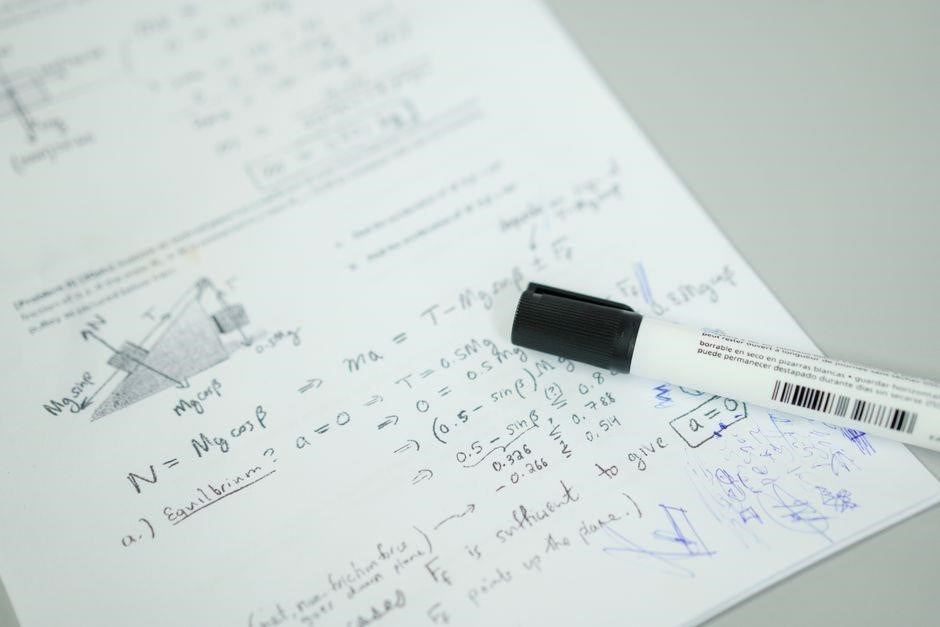
Explore freefully PDFs of core applied‑math texts,lecture slides,and problem sets.Resources include calculus, differential equations, and linear algebra materials, downloadable and annotated for student use. These PDFs support interactive learning and exam prep.

Applied Calculus Course Materials
Students can download free, PDF‑based lecture notes, problem sets, and solutions for applied calculus from open‑access repositories. The core materials cover limits, continuity, differentiation, integration, series, and multivariable extensions, with each chapter beginning with concise summaries, key theorems, and practice problems. Annotated PDFs include instructor‑style marginalia, example solutions, and suggested reading lists. High‑resolution formats allow precise annotation with tools such as Adobe Acrobat or PDF‑XChange. Interactive worksheets embedded as PDF forms let students submit solutions electronically. A companion workbook integrates real‑world applications—population growth, heat transfer, and economic optimization—into the calculus framework. The open‑access nature enables instructors to adapt PDFs to their teaching style, adding custom annotations or supplementary slides. Overall, this collection supports self‑study and classroom instruction, offering a flexible foundation for diverse learning styles.
- Comprehensive lecture notes covering foundational calculus concepts.
- Problem sets with step‑by‑step solutions for self‑practice.
- Annotated PDFs for enhanced understanding.
These PDFs are downloadable and can be incorporated into a management system, ensuring that both instructors and students have access high‑quality materials.!!
Core Applied Mathematics Course Topics
Core applied mathematics courses blend theory with real‑world modeling, offering students a toolkit for quantitative analysis across science, engineering, and economics. Typical curricula begin with differential equations—first‑order linear, separable, and Bernoulli forms—then advance to systems of equations and Laplace transforms for transient analysis. Students learn numerical methods—Euler, Runge–Kutta, and finite difference schemes—supported by downloadable PDF worksheets that illustrate step‑by‑step implementations. Vector calculus modules introduce gradient, divergence, and curl, with applications to fluid dynamics and electromagnetism; accompanying PDFs include annotated vector field diagrams and integral theorems. Fourier analysis and Laplace transforms are explored through spectral decomposition of signals, with PDF tutorials offering visual plots and convergence criteria. Probability theory and statistics are integrated, presenting probability distributions, expectation, variance, and hypothesis testing; PDF handouts feature worked examples and simulation scripts. Optimization techniques, both linear programming and nonlinear methods, are taught using simplex algorithms and gradient descent, with PDF case studies on resource allocation and machine learning loss functions. Partial differential equations—heat, wave, and Laplace equations—are solved via separation of variables and Green’s functions, with PDF solutions that include symbolic derivations and graphical interpretations. All materials are freely available as PDFs, enabling instructors to adapt content and students to annotate directly, fostering an interactive learning environment that bridges abstract theory and practical application.
Linear algebra foundations cover vector spaces, bases, and matrix operations, with PDFs detailing eigenvalue computation, diagonalization, and Jordan canonical forms. Students explore matrix exponentials for solving linear ODE systems, supported by illustrative PDFs showing time‑evolution plots. Stability analysis of dynamic systems is introduced via Lyapunov functions and Routh–Hurwitz criteria, supported by PDF worksheets that guide students through stability proofs. Control theory concepts, including state‑space representation and feedback design, are presented with PDF case studies on PID controllers and observer design. Differential geometry basics introduce manifolds, tangent spaces, and differential forms, with PDFs offering visualizations of curves and surfaces in three dimensions. Supplementary code available!
Open Access Repositories
Open access repositories host applied math PDFs. University libraries digitize collections, while arXiv offers preprints on PDEs, optimization, and stochastic processes. Free, searchable PDFs let students and researchers worldwide access cutting‑edge material!!!!

University Library Digital Collections
arXiv Preprint PDFs in Applied Math
ArXiv hosts a vast repository of preprint PDFs that are indispensable for applied mathematics scholars. Researchers can submit manuscripts in categories such as “math.AP” (Applied Mathematics) and “math.NA” (Numerical Analysis) before peer review, enabling rapid dissemination of new theories, algorithms, and computational results. The platform’s search interface allows filtering by author, institution, or keyword, and many papers include supplementary code or data sets linked via GitHub or Zenodo. Because arXiv PDFs are freely accessible, educators can incorporate cutting‑edge research directly into curricula, and students can practice reading contemporary research papers without paywalls. The preprint format also encourages community feedback; authors often revise their manuscripts based on comments received in the comments section. Moreover, arXiv’s versioning system preserves the publication history, so readers can track changes from the initial draft to the final published version. For applied mathematics, this means early access to novel PDE solvers, stochastic modeling techniques, and machine‑learning‑based numerical methods. The open‑access nature of arXiv aligns with the broader movement toward reproducible research, as many preprints provide LaTeX source files and executable notebooks. Finally, arXiv’s integration with reference managers (e.g., Zotero, Mendeley) streamlines citation management, making it easier for scholars to keep up with the latest developments in applied mathematics. ArXiv’s policy encourages authors to share their LaTeX source, ensuring that readers can compile the document themselves, which promotes transparency and reproducibility in applied mathematics research, and this open‑source approach has been adopted by many leading journals and conferences worldwide, fostering collaboration across disciplines and growth.!!
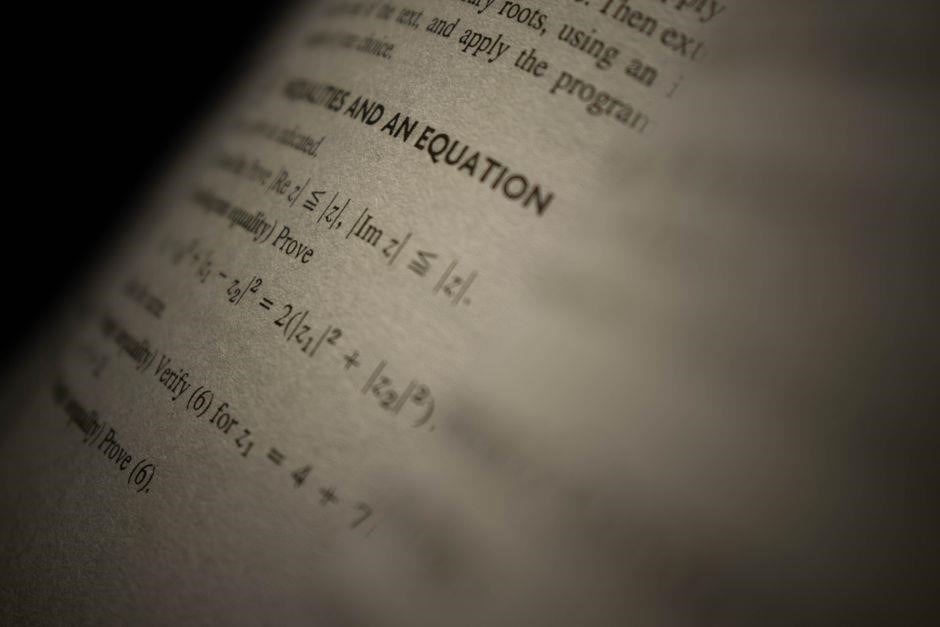
Students and teachers use PDF textbooks for interactive learning. Annotation tools let learners highlight equations, add notes, and share insights. Many platforms support cloud sync, enabling collaborative problem‑solving across campuses. This enhances engagement and retention. Annotate on the go!!
PDF Annotation Tools for Students
Students tackling applied‑math PDFs benefit from robust annotation tools that let them mark equations, add comments, and collaborate in real time. Popular free options include Adobe Acrobat Reader DC, which offers sticky‑note, highlight, and shape tools, and Foxit Reader, known for lightweight performance and a built‑in PDF editor. Cloud‑based platforms such as Kami and Notability allow students to upload a PDF,annotate with pens,underline key formulas, and export the annotated file back to the course LMS. For those who prefer open‑source solutions, PDF-XChange Editor provides a rich set of markup features, including callouts, text boxes, and a mathematics toolbar that supports LaTeX‑style input for precise notation. Mobile‑friendly apps like GoodNotes and Microsoft OneNote support stylus input, enabling handwritten derivations to be captured directly on the screen. Integration with Google Drive or Dropbox ensures that annotated PDFs stay synchronized across devices, while version control features in tools like Mendeley help track changes over time. By leveraging these tools, students can actively engage with complex material, clarify doubts through inline comments, and share insights with peers, thereby enhancing collaborative learning and deepening conceptual understanding of applied‑mathematics topics. Students often share annotated PDFs with classmates enabling peer review and problem solving, which reinforces learning and fosters a community of inquiry.

Legal Considerations for PDF Distribution
Distributing applied‑math PDFs requires respecting copyright law. Use only materials under Creative Commons or public domain, or obtain explicit permission. Short excerpts for teaching, but full copies usually need licensing. Always cite sources.!!!
Copyright and Fair Use in Academic PDFs

In the U.S., the Copyright Act permits “fair use” for limited, non‑commercial academic purposes. Courts assess four factors: 1) purpose and character (educational, transformative); 2) nature of the work (non‑fiction, factual works are favored); 3) amount and substantiality (generally <10 % of the whole or a few pages); 4) effect on the market (no significant impact on sales). When a professor shares a short excerpt to illustrate a concept, the use is usually deemed fair. However, the amount factor is strict; large passages or entire chapters typically require permission or a license. If a PDF is not in the public domain, the author or publisher may grant a license for academic use; this is often documented in the PDF metadata or a separate license file. When in doubt, consult the university’s legal office or publisher’s policy to confirm compliance.
Additionally, the “transformative” use defense strengthens a fair‑use claim when the PDF is repurposed to create new content, such as lecture slides or annotated notes that add commentary, analysis, or synthesis. Proper attribution and limiting the excerpt to the minimum needed for the educational purpose further mitigate risk. Some publishers offer “educational use” licenses that allow the entire text to be shared within a course, provided it is not sold or used commercially. When distributing PDFs via learning management systems, ensure the platform’s terms of service do not conflict with the license. Keep a record of source, excerpt length, and purpose to support compliance. Check publisher policy for licensing. and!??
Creative Commons Licenses for Textbooks
Creative Commons (CC) licenses provide a flexible framework for authors to share their work while retaining certain rights. For applied mathematics textbooks, the most common CC options are CC BY, CC BY-SA, and CC BY-NC. CC BY allows anyone to copy, distribute, and adapt the text, provided the original author is credited. CC BY-SA adds a share‑alike clause, requiring derivative works to carry the same license, which encourages a growing, openly‑shared knowledge base. CC BY-NC restricts use to non‑commercial purposes, which is often suitable for academic settings but may limit broader dissemination. When a textbook is released under a CC license, the publisher typically includes a license statement in the PDF metadata and a visible badge on the cover page. Authors must also ensure that all embedded content—figures, tables, and code snippets—are either original or themselves licensed under compatible terms. Some CC licenses, such as CC BY-NC-ND, prohibit any modification, which can be restrictive for educators wishing to annotate or translate the material. In contrast, CC BY-NC-SA allows educators to adapt the text for classroom use, provided the adapted version remains non‑commercial and shares the same license. The choice of license can influence how the textbook is incorporated into open‑education platforms, such as OER repositories or university libraries, and can affect the ability to convert PDFs into interactive formats like Jupyter notebooks or e‑books. …

Future Trends in Applied Math PDF Resources
Emerging developments in applied‑math PDF distribution are reshaping how scholars access, annotate, and disseminate technical material; First, machine‑learning–driven summarization tools can auto‑extract key equations, proofs, and data tables, enabling researchers to skim large volumes quickly. Second, dynamic PDFs embed executable code cells that launch Jupyter kernels directly from the document, allowing readers to test hypotheses in real time without leaving the PDF viewer. Third, blockchain‑based provenance records are being added to PDF metadata, guaranteeing immutable authorship and version history for open‑source textbooks. Fourth, micro‑licensing schemes let authors sell individual chapters or modules under flexible terms, encouraging modular learning paths. Fifth, accessibility standards are expanding to include audio‑described PDFs and high‑contrast rendering, making advanced mathematics more inclusive. Finally, cross‑platform collaboration platforms are integrating PDF annotation with version control, so that peer review and curriculum updates can occur in a single, traceable workflow. These innovations promise to make applied‑math PDFs more interactive, trustworthy, and adaptable to the evolving needs of educators and researchers worldwide. Additionally, the use of AI‑driven natural language processing is enabling the automatic extraction of key concepts from PDFs, which can be instantly linked to interactive simulations ynamic mod.